

South Africa is currently dealing with a large pool of unclaimed investor funds, with official figures showing that around R4.5 billion in dividends remains unpaid to rightful shareholders. These funds are held by companies listed on the Johannesburg Stock Exchange and are legally owed to individuals who have invested in shares over the years.
Financial authorities have also indicated that this issue is part of a much bigger problem. Across sectors such as pensions, insurance, and dividends, more than R88 billion in financial assets remain unclaimed. Experts estimate that over 300000 people may be eligible to receive dividend payments but have not yet come forward.
Table of Contents
What are Unclaimed Dividends and Why Do They Exist
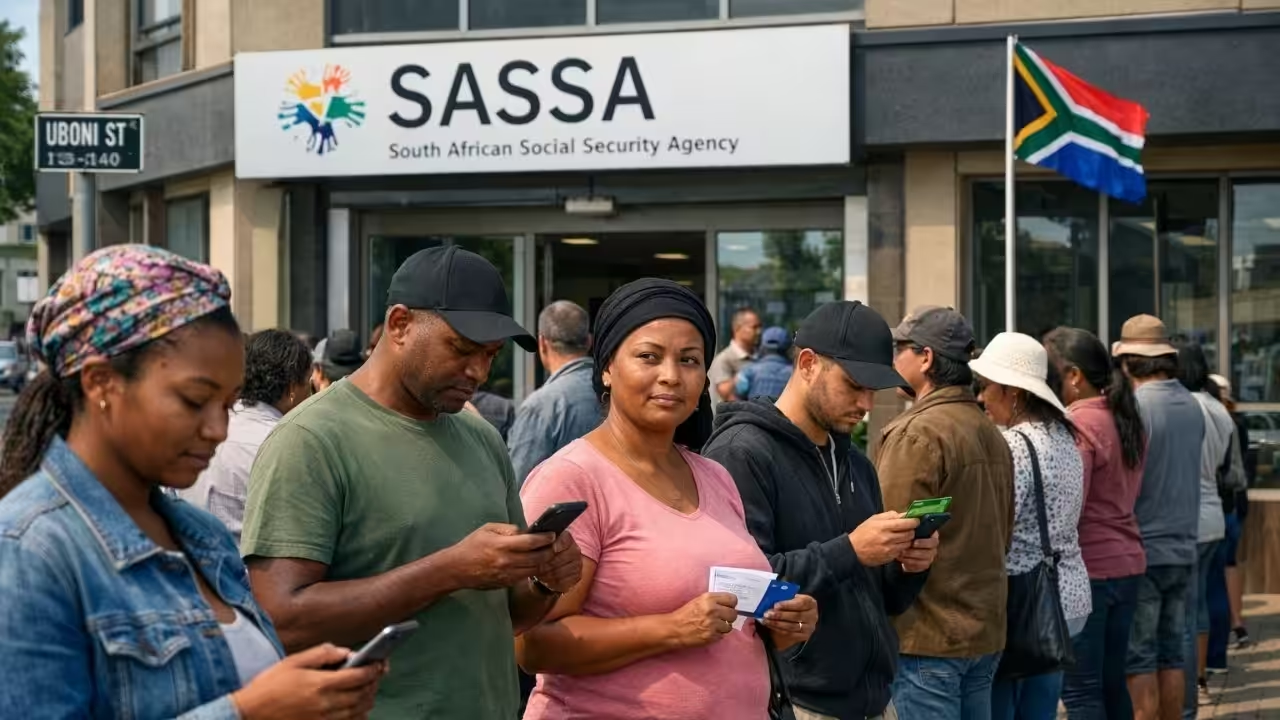
Dividends are payments made by companies to shareholders as a share of profits. When a person owns shares in a listed company, they become entitled to receive these payouts. However, when the payment does not reach the shareholder or is not collected, it is classified as an unclaimed dividend.
These funds accumulate over time when companies are unable to contact shareholders or process payments successfully. In many cases, shareholders may have moved, changed bank accounts, or lost track of their investments. Therefore, companies retain the funds until they identify the rightful owner.
Scale of the Issue Highlights Growing Financial Gap
The amount of unclaimed dividends may appear smaller compared to total unclaimed assets, but it still represents a significant financial gap affecting a large number of individuals. The following data provides a clearer picture of the situation.
| Category | Estimated Figures |
|---|---|
| Total unclaimed financial assets | Over R88 billion |
| Unclaimed dividends | About R4.5 billion |
| Potential claimants | More than 300000 individuals |
| Shareholder records involved | Hundreds of thousands |

This data shows that a substantial number of investors could benefit if these funds are successfully returned.
Main Reasons Behind Unclaimed Dividend Funds
Financial institutions and the Johannesburg Stock Exchange have identified several key reasons why dividends remain unclaimed. In most cases, the issue is linked to outdated or missing information in shareholder records.
- Changes in address without updating company records
- Bank account changes leading to failed payments
- Lack of awareness about share ownership
- Participation in employee share schemes without follow-up
- Death of shareholders without proper estate planning
- Incomplete or incorrect personal records
These factors indicate that both administrative challenges and a lack of awareness contribute to the problem.
Deceased Estates Contribute Significantly to Unclaimed Funds

A considerable portion of unclaimed dividends is linked to deceased shareholders. Estate processes should transfer individuals’ financial assets to beneficiaries upon their passing. However, if the estate is incomplete or beneficiaries are unaware of the investments, the funds remain unclaimed.
This issue is particularly common in older investments or employee share schemes, where records may not be easily accessible. In many cases, families do not know that the deceased held shares, leaving funds with companies for years.
JSE Launches Claim It Campaign to Address the Issue
In response to the growing problem, the Johannesburg Stock Exchange launched the Claim It campaign. This initiative aims to reconnect shareholders and beneficiaries with their unclaimed dividends through a centralized platform.
The campaign allows individuals to search for their details, verify their identity, and submit claims. It also works with listed companies and share registries to improve record accuracy and speed up the claim process.
Early reports suggest that the campaign has already generated strong interest, with thousands of claims submitted and several successful matches identified.
How Individuals Can Check and Claim Their Dividends
The process of claiming unclaimed dividends has been simplified to encourage participation. Individuals can verify their eligibility and submit claims through official channels.
- Access the JSE Claim It platform or contact the support centre
- Enter personal details such as name and identification number
- Check for matching shareholder records
- Submit the required documents for verification
- Wait for confirmation and payment
The system is designed to ensure that payments are made only to verified claimants, reducing the risk of fraud.
Documents Required for Claim Processing
To complete the claim process, individuals must provide supporting documents to confirm their identity and entitlement. The required documentation varies depending on the type of claim.
| Document | Purpose |
|---|---|
| Identity document | Confirms the identity of claimant |
| Proof of address | Verifies residence |
| Contact details | Enables communication |
| Shareholding proof, if available | Supports ownership claim |
| Death certificate for estates | Confirms shareholder status |
| Letters of executorship | Establishes beneficiary rights |
Providing accurate documents is essential for timely processing and approval.
Tax and Payment Considerations
Dividend payments in South Africa are subject to a standard withholding tax of 20 percent. This tax is usually deducted before the dividend is paid to the shareholder.
As a result, the amount received by claimants may be lower than the original dividend declared by the company. Individuals should take this deduction into account when estimating their expected payment.
Financial Impact and Importance of Awareness
The existence of billions of rand in unclaimed dividends has broader economic implications. These funds remain inactive and do not contribute to household spending or investment, which could otherwise support economic growth.
Individuals can use these funds to cover essential expenses or build savings. The situation also highlights the importance of maintaining updated financial records and tracking investments over time.