

For most of human history, having children was closely linked to ideas about legacy and continuity. Families passed down names, traditions, property, and stories through generations. Children were often seen as the most direct way for individuals to leave something of themselves in the future.
However, modern societies are seeing a growing number of adults who choose not to have children or who remain childless due to life circumstances. As this group grows, researchers in psychology and social science have begun exploring how people without children approach questions about meaning, legacy, and mortality.

Studies suggest that individuals without biological descendants sometimes develop a distinct psychological relationship with the future. Instead of focusing on continuation through family lines, they often construct meaning through other forms of contribution, creativity, or influence.
Table of Contents
The Traditional Idea of Legacy
Legacy has long been associated with family continuity. In many cultures, raising children is considered one of the primary ways individuals extend their influence beyond their own lifetime.
Parents often see their children as living connections to the future. Values, traditions, and knowledge are passed down through generations, creating a sense that personal identity continues even after death.
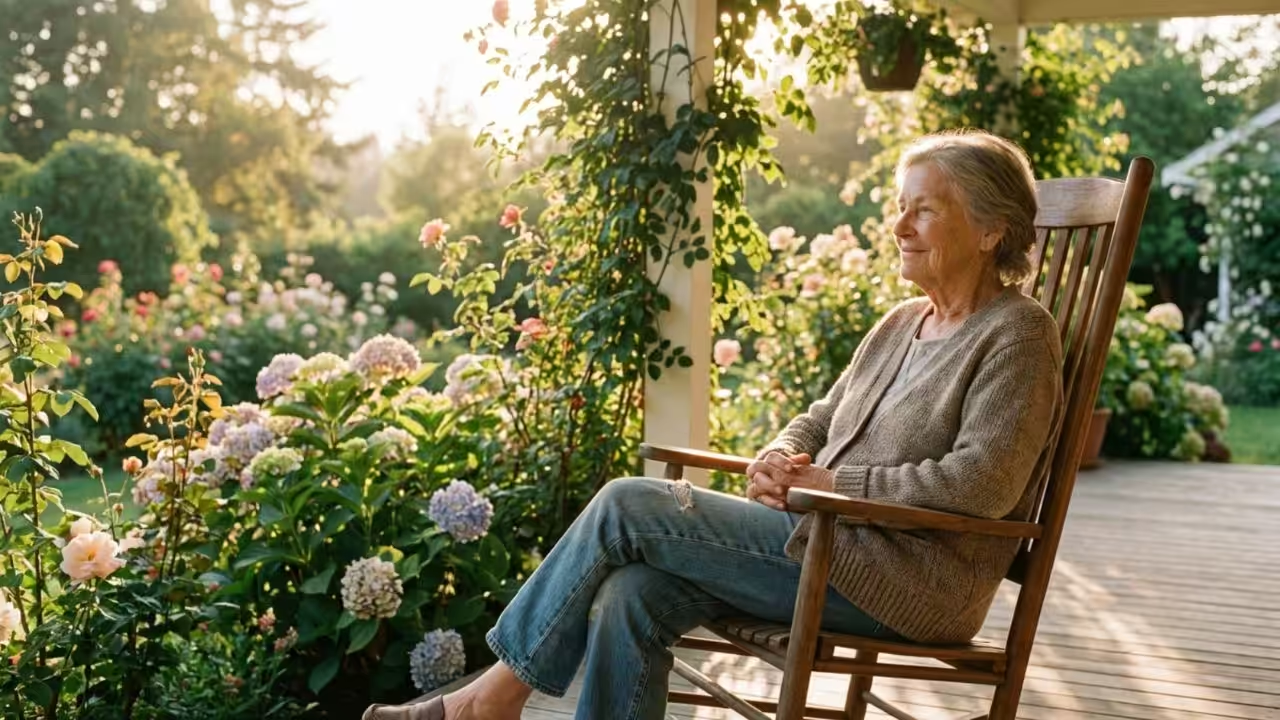
This perspective has shaped social expectations for centuries. As a result, the absence of children can sometimes lead to questions about how individuals define long-term purpose or impact.
Constructing Meaning Without Biological Continuation
People who do not have children often approach the idea of legacy differently. Instead of focusing on family lineage, they may build meaning through other forms of contribution.
Creative work, community involvement, mentorship, and professional achievements are common ways individuals express long-term influence. These activities allow people to shape the world around them in ways that continue beyond their own lives.
For many individuals without children, legacy becomes less about biological continuity and more about the impact they have on communities, ideas, and institutions.
The Psychological Relationship With Mortality
Research in behavioral science suggests that awareness of mortality can influence how people structure their lives. Individuals who expect their influence to continue through children may experience mortality differently than those who do not.
People without descendants may place greater emphasis on the experiences they create during their lifetime. Instead of focusing on generational continuity, they may focus on personal fulfillment, contribution, and relationships formed throughout life.
This perspective can encourage a stronger focus on present experiences and long-term projects that leave visible contributions to society.
The Role of Social Contribution
Many adults without children find meaning in contributing to broader communities rather than a single family unit. Teaching, mentoring, volunteering, or supporting charitable initiatives often become important forms of engagement.
Through these activities, individuals influence younger generations even if they are not raising children themselves. Mentors, educators, and community leaders frequently shape lives in ways that extend far beyond their immediate circles.
This broader form of legacy demonstrates that influence is not limited to biological relationships.
Personal Freedom and Life Design
Another aspect often discussed in research on childfree lifestyles is the freedom to design life paths differently. Without the long-term responsibilities associated with raising children, some individuals choose to invest more time in personal development, travel, creative work, or career exploration.
This flexibility can lead to lives structured around personal curiosity and exploration. For some, it allows deeper focus on intellectual pursuits or professional contributions that may have lasting cultural or social value.
Rather than viewing life without children as lacking continuity, many individuals frame it as an opportunity to pursue different forms of fulfillment.
Cultural Shifts in Modern Society
Societal attitudes toward parenthood have gradually evolved. While earlier generations often viewed having children as an essential life milestone, modern perspectives increasingly recognize a variety of life paths.
Urbanization, economic changes, and shifting career patterns have contributed to this transformation. In many countries, individuals now have greater autonomy in deciding whether parenthood aligns with their personal goals.
As a result, conversations about legacy are expanding to include multiple ways people leave lasting influence on the world.
Relationships Beyond Parenthood
People without children often build strong networks of friendships, extended family connections, and community relationships. These networks can provide emotional support and companionship similar to traditional family structures.
Close friendships and chosen families frequently play a central role in shaping identity and belonging. Over time, these relationships can become as meaningful as biological family ties.
Through these connections, individuals create social legacies that influence the lives of others long after specific moments have passed.
Rethinking What Legacy Means
The growing visibility of childfree lifestyles has encouraged broader discussions about what it means to leave something behind. Legacy is increasingly understood as the combination of experiences, relationships, and contributions that shape the lives of others.
For some individuals, this legacy takes the form of creative work, social impact, or professional innovation. For others, it may involve nurturing friendships, mentoring younger people, or supporting community initiatives.
These diverse paths demonstrate that the influence people leave behind is not limited to biological lineage.
As societies change and life choices become more varied, the ways people think about legacy and mortality are also evolving. Individuals without children often develop alternative perspectives on meaning, focusing on contributions that extend beyond family lines.
Whether through mentorship, creativity, community engagement, or professional impact, people continue to shape the future in countless ways. The idea of legacy is no longer confined to generational inheritance—it now includes every meaningful mark individuals leave on the world around them.