

Retirement is often imagined as the reward for a lifetime of discipline. It is supposed to be the stage when financial pressure eases, the home is secure, the family is close, and the days finally belong to the person who spent decades working for everyone else. Yet, for many people, the emotional reality does not arrive with the same comfort as the financial one.
The linked piece centers on that exact contradiction: a man who reached the traditional markers of success, only to find himself sitting alone in his truck, staring at the life he had built and wondering why it no longer felt meaningful. The strongest part of that story is not the material success itself, but the quiet shock of discovering that comfort and purpose are not always the same thing. The article below is a fully original rewrite and re-curation of that core idea, based on the source material.
Table of Contents
The dream that looks complete from the outside
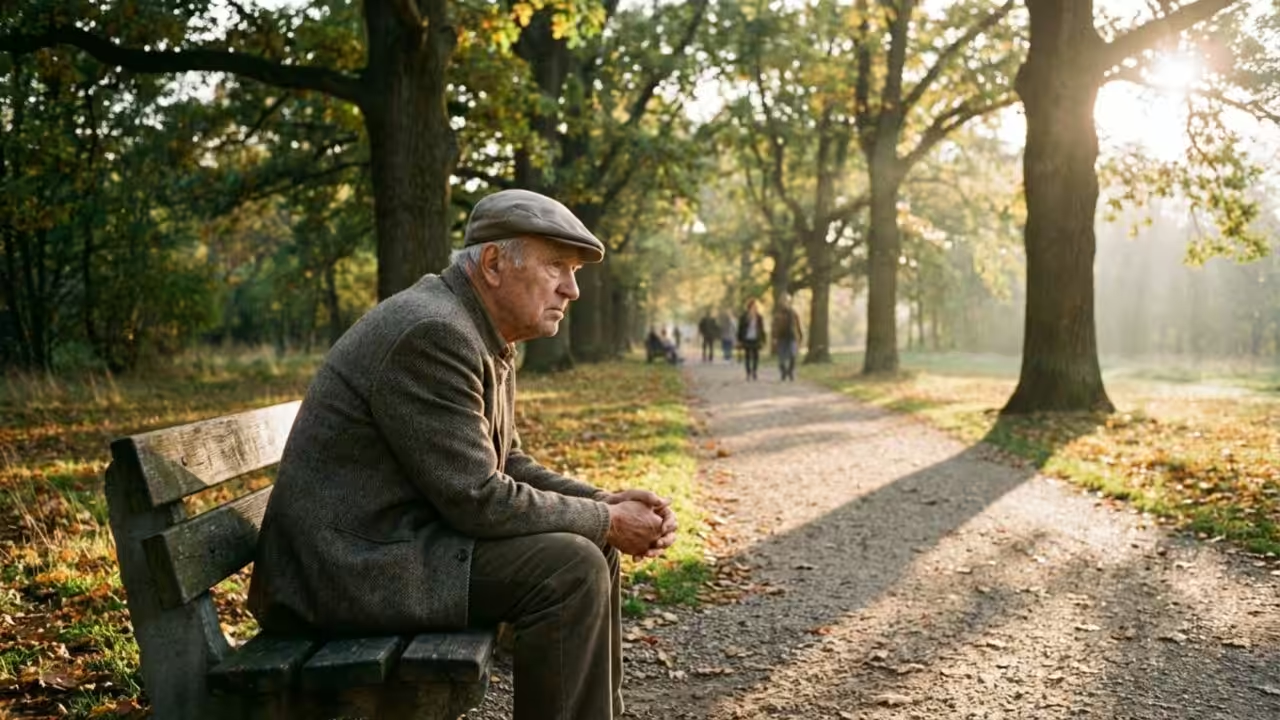
For years, retirement is presented as a final destination. People are taught to save carefully, reduce debt, secure a pension, and hold on until the day they are free. In that long journey, the future takes on a polished image. There will be slow mornings, less stress, more time with loved ones, and a sense of victory after decades of responsibility.
From the outside, that picture can look flawless. A paid-off house suggests stability. A steady pension suggests safety. A loving marriage suggests emotional peace. These are the things many people spend their entire adult lives trying to achieve. Reaching them should feel like arrival.
But sometimes arrival is not as emotionally rewarding as expected. Once the busyness of working life disappears, people can find themselves standing in the middle of a quiet life they once wanted, only to discover that it no longer tells them who they are.
Why the early months of retirement can feel strange
The first phase of retirement often brings relief. There is no alarm clock, no office schedule, no deadlines waiting at the start of the week. For a while, that freedom can feel exciting. Even ordinary things seem lighter because they are no longer squeezed between meetings, calls, and long commutes.
Then, gradually, the novelty fades. The house projects get completed. The errands become repetitive. The late mornings stop feeling luxurious and start feeling empty. A person who once moved through each day with urgency and direction may suddenly discover that time has become too open, too soft, and too undefined.
This can be deeply unsettling, especially for someone whose adult identity was built around reliability, productivity, and routine. Work may have been stressful, but it also gave structure to the day and meaning to effort. When that structure disappears overnight, the emotional impact can be greater than many people expect.
The hidden loss behind financial success
One of the most difficult parts of this transition is that the sadness can feel undeserved. A retired person may look at their life and think they have no right to complain. After all, they are secure, healthy, and no longer burdened by the strain of employment. Compared with others still struggling, dissatisfaction can feel almost shameful.
That is what makes this kind of emptiness so hard to talk about. It does not always look like crisis. It does not announce itself dramatically. Instead, it can appear in quieter ways. Getting out of bed takes longer. Simple choices feel heavier than they should. Days begin to blur. Nothing is especially wrong, yet nothing feels especially alive either.
This emotional confusion often grows from a deeper problem: many people prepare financially for retirement, but far fewer prepare psychologically. They know how to stop working, but they do not know how to replace the role that work once played in shaping identity, routine, and usefulness.
How work becomes part of personal identity
A career is not only a source of income. Over time, it becomes a system of meaning. It tells a person where to go each morning, what problems need solving, who depends on them, and how success will be measured. Even frustrating jobs can create a strong internal rhythm. There are expectations, responsibilities, and visible proof that one’s time matters.
After thirty or thirty-five years of living inside that pattern, the absence can feel disorienting. A person may not miss the meetings or the pressure itself, but they may deeply miss being needed. They may miss the feeling that their decisions carried weight, that their presence mattered in a room, or that their week had shape.
Without that sense of direction, retirement can begin to feel less like freedom and more like drift. Instead of enjoying open time, some people feel as though they are floating without an anchor.
The social silence that often follows retirement
Another painful change is the loss of everyday connection. Many work relationships are built through repeated contact rather than deep planning. People share coffee, jokes, frustrations, and small updates simply because they see one another constantly. These interactions may seem ordinary at the time, but they quietly support emotional well-being.
Once retirement begins, those natural meeting points vanish. Former colleagues return to their routines. Messages become less frequent. Plans are suggested but postponed. The social world that once felt stable can start shrinking with surprising speed.
This change can be especially hard for people who did not realize how much of their companionship came from the workplace. The loss is not only about friendship. It is also about the disappearance of casual human contact, the kind that gives texture to ordinary days. Without it, the silence at home can begin to feel heavier than expected.
Why purpose matters more than comfort
Comfort makes life easier, but purpose makes life feel worth engaging in. That difference becomes much clearer after retirement. A person can have safety, routine domestic peace, and free time, yet still feel emotionally undernourished if there is nothing that asks for their mind, effort, or care.
Purpose does not always need to be grand. It does not have to involve prestige, income, or public recognition. What matters is whether it creates involvement. It should call the person into the day instead of leaving them to merely pass through it.
For some, purpose may come from mentoring, volunteering, writing, gardening, community work, spiritual life, caregiving, or creative practice. For others, it may be learning something entirely new. The point is not to replace a full-time career with another demanding structure. The point is to rebuild a reason to participate.
Rebuilding life after the old schedule ends
A meaningful retirement often begins when a person accepts that feeling lost is not failure. It is a normal response to a major life transition. That acceptance matters because shame can delay recovery. If someone keeps telling themselves they should be grateful instead of honest, they may ignore the deeper need for renewal.
The rebuilding process usually starts small. A morning walk at a fixed time. A weekly commitment outside the house. A creative habit that gives shape to the day. A volunteer role that invites responsibility. None of these actions needs to be dramatic. Their value lies in repetition and intention.
Structure also matters more than many retirees first assume. Total freedom can be exhausting when every day feels the same. A modest routine can restore rhythm without recreating the pressure of employment. When certain mornings are for writing, certain afternoons are for service, and certain days include social connection, life begins to regain form.
A different understanding of a successful retirement
The traditional image of retirement focuses on what a person escapes: deadlines, bills, commuting, and work pressure. But a richer view asks a different question. It asks what a person is moving toward. If that part remains unanswered, even a secure retirement can feel emotionally hollow.
Real success in this stage of life may have less to do with comfort alone and more to do with continued engagement. A person still needs reasons, commitments, relationships, and forms of expression. They still need something that pulls them out of isolation and back into participation.
That is why the emotional crisis described in the original piece feels so powerful. It is not really about one man sitting in a truck. It is about the moment when achievement stops being enough and a deeper human need finally makes itself impossible to ignore.