
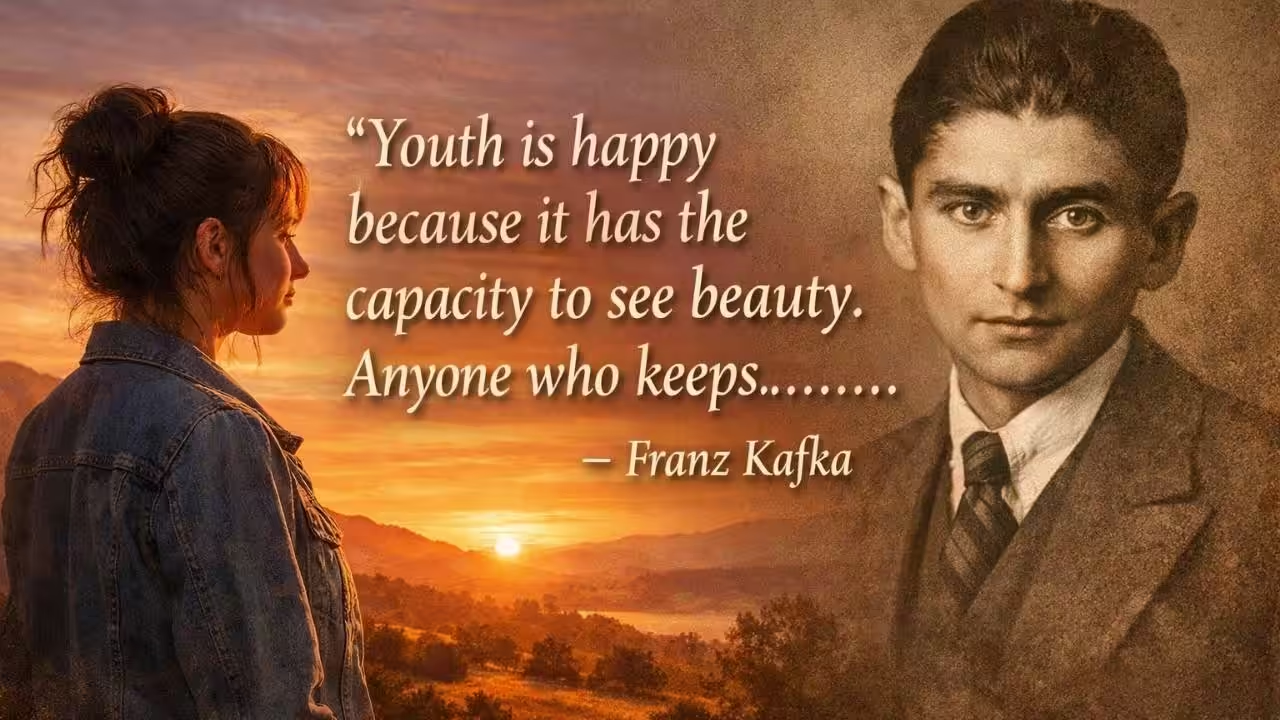
Youth is often misunderstood as a matter of age, but many thinkers have challenged that idea. Franz Kafka’s reflection on youth and beauty presents a deeper perspective. Instead of tying happiness to physical strength, freedom, or lack of responsibility, he connects it to the perception of the ability to notice and feel beauty in everyday life.
This idea shifts the meaning of youth away from calendars and milestones. It suggests that joy comes from awareness, emotional sensitivity, and openness to experience. When these qualities are present, a person can feel vibrant and alive regardless of how many years have passed.

In this sense, youth is not something that disappears with time. It fades only when curiosity dulls and the world begins to feel ordinary, repetitive, or emotionally distant.
Table of Contents
Understanding the Quote in Simple Language
“Youth is happy because it has the capacity to see beauty. Anyone who keeps the ability to see beauty never grows old.”
When Kafka says youth are happy because they can see beauty, he points to a natural attentiveness often found in younger minds. Small moments, a change in light, a conversation, and a new idea can feel meaningful and exciting.
The second part of the quote carries an even stronger message. Kafka suggests that anyone who preserves this way of seeing never truly becomes old. Aging, in his view, is not defined by wrinkles or years, but by the loss of emotional responsiveness and imagination.
Put simply, the message is this: happiness lasts longer when a person stays curious, emotionally open, and willing to notice beauty in ordinary life.
Franz Kafka: Life, Struggles, and Creative Legacy
Franz Kafka was born in 1883 in Prague, into a German-speaking Jewish family. He trained as a lawyer and spent much of his adult life working in insurance, writing in the late hours and in personal moments of solitude.
His personal experiences strongly shaped his writing. Kafka frequently grappled with self-doubt, anxiety, and a challenging relationship with authority, particularly in the context of his family. These inner conflicts became central themes in his work.
Despite publishing only a small portion of his writing during his lifetime, his stories later gained worldwide recognition. His novels and short stories explored alienation, fear, bureaucracy, and the fragile nature of human identity, leaving a lasting impact on modern literature.
Five Thought-Provoking Quotes by Franz Kafka
Kafka’s writing is known for its emotional intensity and philosophical depth. Some of his most memorable lines include:
- Youth finds happiness in its ability to recognize beauty, and those who keep that ability never truly age.
- A powerful book should break through emotional numbness and awaken something buried inside us.
- Human struggle often feels like a battle between oneself and an overwhelming world.
- Inner confinement can exist even without physical barriers.
- Life’s meaning is inseparable from its limits and endings.
Together, these lines reveal Kafka’s unique ability to express complex emotions in simple yet unsettling ways.
Meaning of the Quote in Today’s World
Modern life moves at an extraordinary pace. Constant notifications, digital screens, and daily pressures often reduce attention and emotional depth. Kafka’s words feel especially relevant in this environment, reminding readers of the value of slowing down and truly noticing what surrounds them.
People who take time to observe nature, art, or genuine human connection often experience greater emotional balance. This aligns closely with Kafka’s belief that happiness depends less on external success and more on inner awareness.
The quote also speaks directly to aging populations. It offers reassurance that mental freshness does not depend on the body’s youthfulness. Creativity, curiosity, and emotional presence can keep the mind active and fulfilled at any stage of life.