
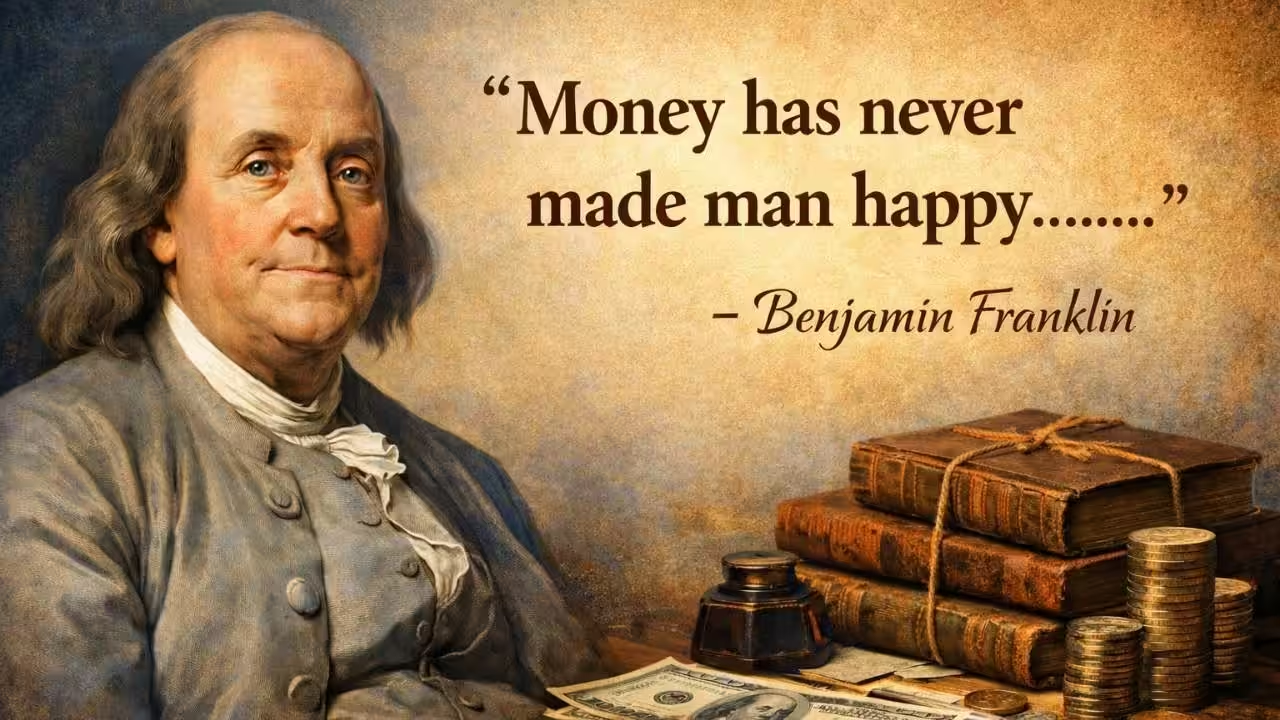
Benjamin Franklin lived from 1706 to 1790 and was one of the most influential figures in early American history. He worked as a printer, writer, scientist, and public servant, and his ideas reached ordinary people through newspapers, pamphlets, and almanacs. He wrote many of his statements on money, work, and character for practical use rather than philosophical debate.
The quote “Money has never made man happy” is widely shared today because it comes from Franklin’s long-standing focus on discipline, moderation, and responsible living. In several of his writings, he warned that wealth alone does not remove worry or dissatisfaction if human desires continue to grow.

Although the wording is often shortened, the idea behind the quote matches Franklin’s repeated message: money is useful for meeting needs, but it does not automatically produce satisfaction or peace of mind. This makes the quote relevant not only as a historical saying but also as a reflection of real economic behavior observed across societies.
Table of Contents
Detailed Quote and What it Means in Practical, Factual Terms
Detailed Quote: “Money has never made man happy, nor will it, there is nothing in its nature to produce happiness. The more of it one has, the more one wants.”
“Money has never made man happy” does not claim that money is useless. It points to a limit: money is a tool that can solve problems like food, housing, safety, and access to services, but it may not automatically create lasting satisfaction once basic needs are met.
The second part, often paired with the quote “The more one has, the more one wants,” aligns with a common pattern described in consumer and well-being research: people adapt to improvements, and their expectations can rise with their standard of living. This can keep the feeling of “not enough” alive even when income grows.
Franklin’s own writing strongly supports this practical focus: he praises industry and saving, but he repeatedly warns that pride, constant spending, and debt create long-term pressure rather than comfort.
Benjamin Franklin’s Early Life and Other Creations
Benjamin Franklin was born in Boston in January 1706 into a large working-class family. He left formal schooling early and trained as a printer, later running a successful printing business in Philadelphia. By his early 40s, Franklin had gained enough financial stability to focus on science, writing, and public service.

He made major contributions to science, including experiments with electricity that led to the invention of the lightning rod. He also created practical tools such as the Franklin stove, bifocal glasses, and improvements to street lighting. These inventions were designed to solve everyday problems rather than generate personal wealth.
Beyond science, Franklin played a key role in public institutions. He helped establish libraries, fire departments, and universities, including what later became the University of Pennsylvania. His life shows that while he valued money as a tool, he focused heavily on public benefit, education, and self-improvement.
Top 5 Motivational and Inspirational Quotes by Benjamin Franklin
Benjamin Franklin is known for short, direct statements that focus on discipline, effort, and responsibility. Some of his most widely recorded and circulated quotes include:
- “An investment in knowledge pays the best interest,” which reflects his strong belief in education as a long-term benefit for individuals and society.
- “Early to bed and early to rise makes a man healthy, wealthy, and wise,” a line that highlights routine, health, and productivity rather than luck or inheritance.
- “By failing to prepare, you are preparing to fail,” which emphasizes planning and foresight in both personal and financial matters.
- “Beware of little expenses; a small leak will sink a great ship” is often cited in discussions about budgeting and debt management.
- “Money has never made man happy” is the quote of the day, which summarizes Franklin’s warning that wealth without control or purpose can lead to dissatisfaction rather than security.
Why This Quote Matters in Modern Life
Modern economies link income to access to essentials such as housing, healthcare, and education. Surveys show that higher income improves living conditions and reduces hardship, especially for lower-income people, but beyond basic stability, increased income doesn’t always boost satisfaction in proportion.
Franklin’s quote today shows how higher incomes can lead to higher spending expectations, which can strain finances if the cost of living rises faster than savings. This aligns with trends such as rising debt, increased discretionary spending, and the tendency to compare oneself to others.
The quote is relevant because it reminds us that money is a tool for stability and function, not a guarantee of happiness. Ultimately, it reflects a reality: money alleviates problems but doesn’t eliminate dissatisfaction, making Franklin’s message still practical across economic changes.