
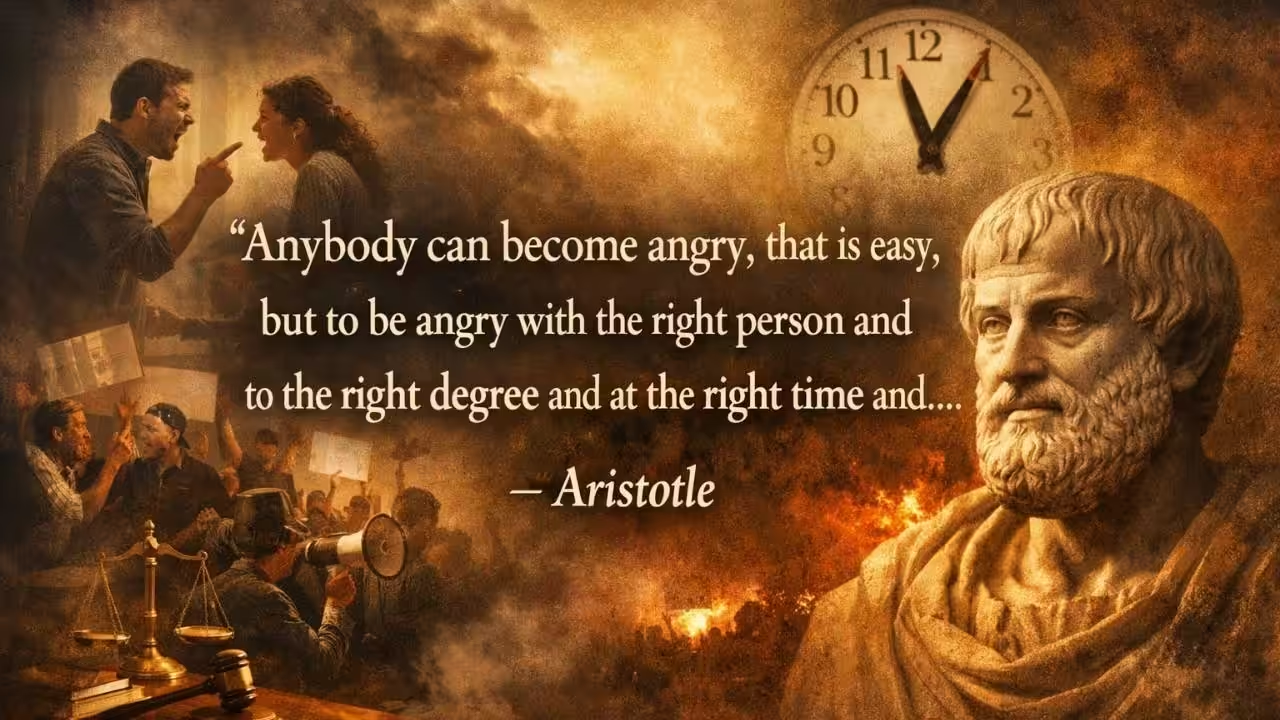
Aristotle’s well-known line “Anybody can become angry; that is easy, but to be angry with the right person and to the right degree and at the right time and for the right purpose and in the right way, that is not within everybody’s power and is not easy” is not advice to suppress emotions. It is a reminder that anger becomes meaningful only when it is guided by judgment.
In other words, feeling anger can happen quickly and naturally, but using anger in a fair, measured, and constructive manner requires self-control, clarity, and maturity.

This idea remains relevant because anger often arises when someone believes a boundary has been crossed or an injustice has occurred. Yet anger can also become harmful in seconds through impulsive speech, harsh assumptions, or actions that create a bigger problem than the original issue.
Table of Contents
Core Meaning of the Quote
Detailed Quote: “Anybody can become angry; that is easy, but to be angry with the right person and to the right degree and at the right time and for the right purpose and in the right way, that is not within everybody’s power and is not easy.”
Aristotle is highlighting a clear difference between two things:
- First, the emotion of anger, which can appear instantly.
- Second, the skill of appropriate anger, which takes practice and character.

The quote does not claim that anger is always wrong. It suggests that anger can be appropriate, even necessary, but only when it is directed correctly and expressed with discipline. If anger is misdirected, exaggerated, mistimed, or used as a weapon, it can easily become unfair and damaging.
Why Aristotle Believes “Right Anger” is Difficult
The reason “right anger” is hard is that anger tends to outrun reason. It can push a person to speak before thinking, to accuse before confirming the facts, or to punish before understanding intent. It also encourages the mind to justify itself: once someone feels angry, it becomes easier to believe that any reaction is acceptable.
Aristotle’s message can be read as a practical standard: it is not enough to say, “I’m angry, therefore I’m right.” A person must be able to explain why the anger is justified and then show that it is being used to improve the situation rather than worsen it.
Understanding the Five “Rights” in Aristotle’s Quote

Aristotle’s quote is powerful because it sets out multiple conditions. Each one is a checkpoint that turns raw emotion into moral discipline.
Being Angry With the Right Person
This means anger should be directed toward the actual cause of harm or wrongdoing, not toward an easy target. Many conflicts arise when anger is displaced: someone vents at family members, coworkers, or strangers because they feel safer than the real source of the problem.
Appropriate anger requires accuracy. It asks: Who actually made the choice? Who holds responsibility? Is it a personal issue, a misunderstanding, or a broader system problem?
Being Angry to the Right Degree
Proportion matters. Too much anger can turn a small mistake into a public war. Too little anger can allow repeated harm to continue without consequences. Aristotle’s view implies that the intensity of anger should match the seriousness of the situation.
In daily life, this is often the point where people struggle most. A person may be correct about the problem but wrong about the size of the reaction. When the degree is wrong, anger stops being helpful and starts becoming unfair.
Being Angry at the Right Time
Timing is not a small detail; it shapes outcomes. Even justified anger can fail if it is delivered at the wrong moment when emotions are high, when people cannot listen, or before facts are clear. The “right time” may mean waiting until a private conversation is possible or until enough information has been gathered to speak fairly.
Aristotle is not asking people to delay forever. He is pointing to the difference between anger that corrects and anger that explodes.
Being Angry for the Right Purpose
Purpose separates constructive anger from destructive anger. Constructive anger aims to protect a boundary, correct a wrong, prevent future harm, or restore fairness. Destructive anger aims to shame, dominate, humiliate, or get revenge.
Two people can be equally angry, but the moral value of their anger can differ completely depending on what they are trying to achieve.
Being Angry in the Right Way
The “right way” is about expression. Anger can be communicated firmly without cruelty. It can be direct without being insulting. It can be serious without becoming threatening.
This part of the quote is a reminder that tone, words, and method matter. Anger expressed in the wrong way can destroy trust and make resolution harder, even when the original complaint was valid.
Practical Lesson: Anger Should Serve Judgment, Not Replace It
Aristotle’s quote offers a balanced view. It does not pretend that anger is unnatural. It also does not excuse harm done in anger. Instead, it frames anger as something that should be governed.
In modern terms, the quote can be understood as a call for emotional intelligence, but with stronger moral expectations. The question is not only “How do I feel?” but also “What should I do, and how should I do it?”
A Simple Real-Life Framework for Applying Aristotle’s Idea
A helpful way to apply this quote is to treat anger like a signal rather than a command. Anger can point to a concern, but it should not automatically control the response. Before acting, it helps to slow down long enough to check whether the anger meets the standard Aristotle describes.
One short method is to pause and reflect on three things:
- First, whether the anger is accurate and directed at the true cause.
- Second, whether the intensity matches the harm.
- Third, whether the expression will lead to repair or only escalate the conflict.
This is not about becoming passive. It is about becoming effective.
Examples of “Any Anger” vs “Right Anger”
In workplaces, anger often arises when people feel disrespected, unfairly blamed, or pressured beyond their limits. “Any anger” might show up as sarcasm, public criticism, or hostile messaging. “Right anger” would focus on the specific behavior, speak with clarity, and aim for accountability without humiliation.
In families, anger can arise over repeated irresponsibility or broken trust. “Any anger” may turn into yelling or personal attacks. “Right anger” would still be firm but would remain focused on correction, boundaries, and future behavior rather than emotional damage.
In public life and social debate, anger can form around real suffering and injustice. “Any anger” may label opponents as evil and refuse to listen to them. “Right anger” can still be strong, but it keeps its purpose focused on protecting people and improving outcomes, not simply on destroying reputations.
Why This Quote Remains Relevant
The quote remains widely repeated because it recognizes a truth that most people learn through experience. Anger is easy. Restraint is hard. Fairness is hard. Timing is hard. Communication is hard. The higher the stakes, the harder it becomes to meet all the conditions Aristotle describes.
In that sense, the quote does not shame anger. It challenges people to treat anger as a responsibility. When anger is directed at the right person, in the right degree, at the right time, for the right purpose, and in the right way, it stops being a loss of control and becomes a disciplined response. That discipline is what Aristotle calls true strength, not the strength of silence, but the strength of guided action.
I learned to say I'm disappointed rather than angry or mad. I find the words angry or mad to be strong emotions felt over things that I have no control over. Getting upset over the way someone view things is giving the other person the power to affect your peace of mind.