
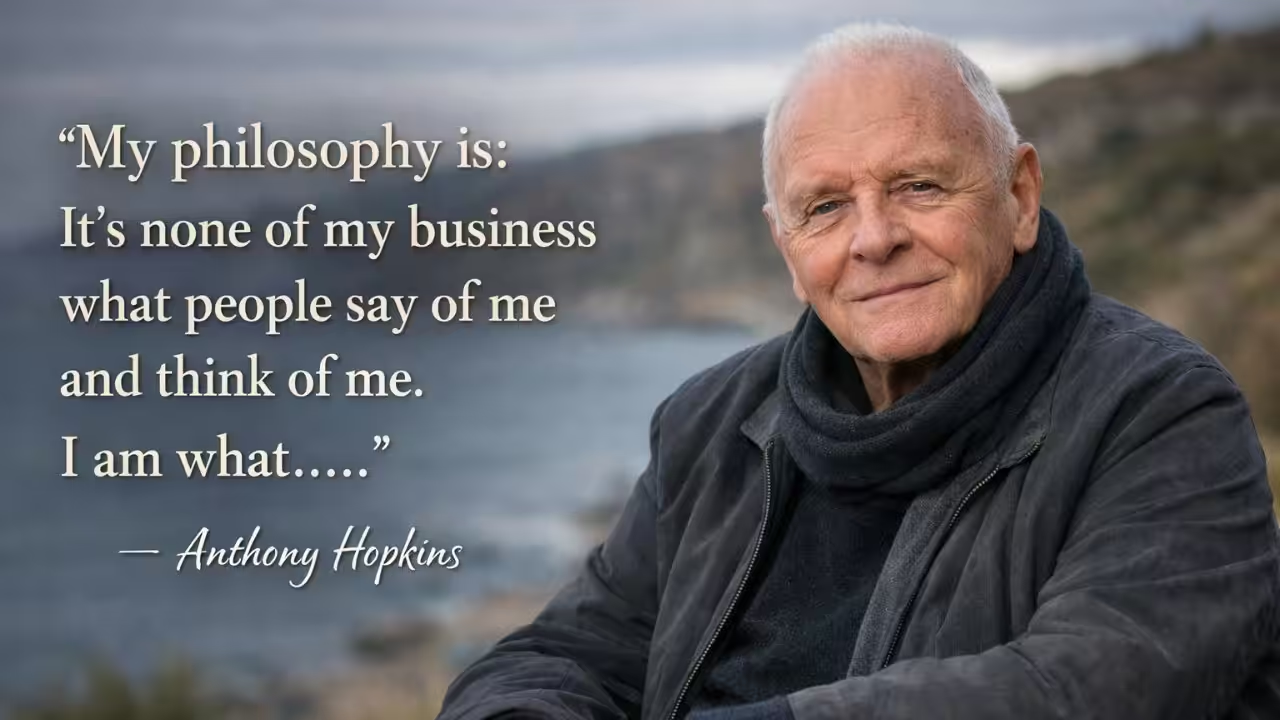
Sir Anthony Hopkins is a Welsh actor whose career spans more than six decades across theatre, television, and film. He has received the highest honors in the entertainment industry, including two Academy Awards, multiple BAFTA Awards, and several Emmy Awards. Beyond acting, he is also a writer and composer, and he remains active in creative work well into his later years.
Alongside his professional success, a short statement attributed to him about ignoring public opinion and accepting life as it comes has become widely circulated. This article examines the background of that quote, its authenticity, how it reflects Hopkins’s own views, and why it continues to resonate in public discourse.
Table of Contents
The Quote and Its Core Message
The quote often shared as his “philosophy” reads: “My philosophy is: It’s none of my business what people say of me and think of me. I am what I am, and I do what I do. I expect nothing and accept everything. And it makes life so much easier.”
The quote commonly attributed to Hopkins emphasizes personal independence from others’ judgments and promotes a mindset of low expectations and full acceptance of life’s outcomes. Its popularity stems from the simplicity of its language and the universality of its theme: emotional freedom through self-definition rather than external validation.
Although the wording differs slightly across platforms, the meaning remains consistent. The statement suggests that peace of mind comes from focusing on one’s actions and values rather than on praise or criticism from society.
Origin and Authenticity

The sentence does not appear to come from a single book or formal philosophical essay written by Hopkins. Instead, it is traced back to interviews and magazine profiles in which he spoke about happiness, aging, and detachment from fame. Over time, editors and quote collectors condensed his remarks into a shorter, memorable form.
Fact-checking reviews have concluded that while the exact phrasing may not be directly lifted from one transcript, the sentiment accurately reflects ideas Hopkins has repeatedly expressed in public conversations. This qualifies the quote as representative, not fictional.
Hopkins’s View on Life and Detachment
In several interviews, Hopkins has described his approach to life as practical and calm. He has spoken about letting go of anger, avoiding unnecessary expectations, and learning to live with uncertainty. These ideas align closely with the philosophy captured in the circulating quote.

His reflections often connect emotional independence with personal growth. According to his accounts, maturity brought an understanding that public approval is temporary, while inner stability requires acceptance and discipline.
Career Timeline and Public Context
Hopkins’s long career provides a strong backdrop for the quote’s meaning. He experienced both early struggles and later worldwide fame, giving him a unique perspective on success and failure. His reflections on life came after decades of working under public scrutiny.
The quote gained particular visibility in the 2020s, when interviews about aging, happiness, and creativity became more frequent. This timing contributed to its use as a symbol of wisdom drawn from experience rather than theory.
Common Public Uses of the Quote

The statement is now widely used in motivational writing and social media discussions about emotional strength and self-respect. It is often shared as advice for managing criticism and stress in modern life.
Its association with a well-known public figure adds authority to the message, making it more persuasive than similar anonymous sayings.
The quote is most often used in the following contexts:
- Motivational articles and personal development content
- Social media posts about confidence and self-acceptance
- Media profiles discussing fame, aging, and inner peace
Practical Interpretation
At its simplest level, the quote encourages people to separate their identity from public opinion. It promotes focusing on personal conduct rather than on how others judge actions.
This interpretation closely aligns with psychological principles of resilience and mindfulness, even though Hopkins uses informal, direct language rather than technical language.
Key ideas expressed in plain terms include:
- Opinions of others do not define personal worth
- Lower expectations reduce emotional disappointment
- Acceptance improves mental balance and stability
Why the Message Has Credibility
The philosophy is reinforced by Hopkins’s documented life events, including his long sobriety, sustained career, and reflective interviews in later life. These facts show that the message is rooted in lived experience rather than abstract thinking.
Because the quote aligns with his biography, it carries more weight than a generic motivational phrase. Readers tend to view it as guidance shaped by hardship, discipline, and long-term reflection.
Reliability of Information
Primary interviews and major magazine profiles provide the strongest evidence for Hopkins’s views on detachment and acceptance. These sources show that he has repeatedly spoken about similar ideas in different contexts.
Quote aggregation websites demonstrate how the sentence spread globally, but they do not establish original authorship. For accuracy, direct interviews and verified biographical records remain the most reliable references.
The well-known quote attributed to Sir Anthony Hopkins reflects a philosophy he has consistently discussed in interviews: emotional independence, acceptance of life’s outcomes, and freedom from external judgment. While the precise wording cannot be traced to one official publication, its meaning aligns closely with his own statements.